

Boundaries During the Holidays: What to Do when You Don’t Feel Heard.
Boundaries during the holiday season often evoke a range of emotions, regardless of the individual's circumstances.
While boundary setting can be challenging in itself, the holiday season makes it particularly challenging. Check out the information below to learn more about boundary setting and how to manage difficult conversations.
When we hear the word "boundaries," it can create immediate unease. But why? Perhaps boundaries were never modelled to you. Perhaps you worry about hurting someone’s feelings (where are my people-pleasers at?). Or maybe the people in your life are not receptive to boundaries… which may leave you feeling even more determined to set some! No matter the reason, I am here to tell you that boundary setting can be done in a kind and intentional manner. You can also be as gentle or assertive as you feel comfortable. Boundaries are a way of communicating our needs and limits. They can help us create comfort and safety in our relationships with others.
For those of you who are curious about how to set a boundary or what to say, here are a few common holiday scenarios:
Scenario: You are invited to an event, but know you do not have the time or that it would be too overwhelming for your family.
Boundary setting: Thank you for the invitation, but I am unable to attend. (Remember, NO is a complete sentence; you do not need to explain if you do not wish to.
Scenario: A family member pressures you to give your child more treats and a later bedtime.
Boundary setting: “[Insert your child’s name here] has had enough and enjoys their nightly routine, so we will be sticking with it.”
Scenario: Relatives pressure you to let them hold your newborn.
Boundary setting: “[Insert your child’s name here] is comfortable with me right now, but thanks for the offer.” OR “I am more comfortable keeping [insert your child’s name here] with me.”
AND if the person continues to challenge your boundary, you might follow up with:
“I already let you know that I am not comfortable with other people holding my baby, and I would appreciate it if you could respect my decision.
If that feels too firm, you might say: “Postpartum has been difficult for me, and it would make me feel supported if people did not continue to ask me to hold my baby.
Scenario: You receive an invitation to a family Christmas lunch at 12 pm, and your family is unwilling to change the time, even though that is when your infant takes their nap.
Boundary setting: “As you know, [insert your child’s name here] naps at that time, so we may not be able to make it or we may come late.”
If your family becomes upset by this, you may say: “We understand that you are hosting and appreciate that. However, that is when [insert your child’s name here] goes for their nap and we will not be changing their sleep schedule.”
Scenario: You have attended a holiday gathering, and your family member does not want you to leave and pressures you to stay longer.
Boundary setting: “We really enjoyed our time with you but we are going to head home now. Thanks for a fun night!”
Scenario: You show up to a holiday function and get asked repeatedly about "when you will be having a baby".
Boundary setting: I would prefer not to discuss this topic OR this is actually a sensitive topic for me that I would prefer not to talk about.
*If you feel that you want to educate someone in these moments this is always an option. That being said, it is not your responsibility and you can choose what is best for you in these situations.
Boundary setting may be particularly challenging for parents. It may seem like the Christmas magic is intertwined with everyone having the opportunity to spend time with your little one. Sometimes it can feel like you are just trying to accommodate everyone around you while you barely slow down to enjoy the holidays yourself. As a person and a parent, you also get to choose what the holidays look like for your family. While some people may embrace the holiday chaos, others may wish for moments of peace. There is no right or wrong answer; it is simply identifying what is best for you and communicating that to the people around you. In some situations, we might not feel that setting a boundary is worth the ensuing argument. Ultimately, you get to decide what is best for you!
Truths about boundary setting:
Setting boundaries is healthy and can enhance our relationships with others.
You do not need to apologize for setting a boundary.
Boundary setting can take time and practice; it is a skill.
You have a right to leave a situation if you set a boundary and it is not respected.
Boundaries are personal and can look different for everyone.
No is a complete sentence.
My hope for you this holiday season is that you feel empowered to set boundaries and protect your peace. We all deserve to enjoy the holidays. As a gentle reminder to everyone, we never know what someone may be experiencing. While it may not be intentional, such questions can leave individuals feeling isolated, uncomfortable, hurt, and blindsided. Many people experience challenges related to endometriosis, infertility, and pregnancy loss. Let's work together this holiday season to help everyone feel comfortable!
Written by: Megan Ivancic- Registered Psychologist, passionate about supporting clients through: Mom Rage, loss, perinatal mental health issues and more. Megan also provides equine therapy and works closely with horses and our clients to help with healing after trauma.
It’s okay to hate Christmas: Unpacking Grief and Loss During the Holidays
15 years ago today, my entire world, in the blink of an eye, completely changed. My Mom died. Just 16 days before Christmas, she had an unexpected heart attack, and she was just 49 years old. I went to bed excited for the upcoming Christmas holiday, having just gone Christmas shopping with my Mom a couple of days prior. As I got out of the car to say goodbye to her for what I wouldn’t realize would be the last time, she shouted at me from the car, “And make sure not to buy yourself anything before Christmas, I love you.” I laughed, waved and yelled back, “I love you.” And then a couple of days later, I woke up, and nothing was the same. I had lost my best friend.
My Mom was the ultimate “magic maker”, a single mother of three kids. After leaving an abusive marriage, I think she felt even more responsibility and pressure to make it perfect for us kids who were going through so much. She worked full-time to support us kids, but didn't make much and had no financial support from anyone, including our father. She did the very best she could. The tiny details that she thought of each year made it so magical. Because of her, I loved Christmas, and when I lost her, that sparkle immediately disappeared.
In the weeks to come after losing her, as we always are, I was surrounded by the “Christmas joy and cheer.” It was everywhere; I couldn’t escape it, and I constantly felt like I was drowning in it. All while navigating making funeral arrangements for your parent, picking out coffins, while others were picking out gifts to go under the tree. It felt so disconnected, because it was.
Christmas was her favourite time of year, and she died weeks before it. The anger that I felt in how unfair the universe was only began to grow, and over the next few years, I became the Grinch. And honestly, I liked it. The anger that I felt was protecting and guarding the pain, grief and loss that was too tender to share and express. And let’s be real, no one wants you to show that anyway. Much like so many other areas of our lives, we are only allowed to share the bright, sparkling parts. We tend to turn away from the dark parts, to tuck them away or ignore it. But there was no way I could. My body would remember the moment the weather shifted and the cold set in.
Society doesn’t help. We tend to engage in toxic positivity, and we demand a timeline on grieving. A year, at most. We allow those grieving to take up a bit of space those first few weeks, we offer condolences and show up to funerals or send flowers. And then people disappear when those grieving actually need them the most. We acknowledge that people will feel pain on the first anniversary, and then, subconsciously, inadvertently, and sometimes very obviously, let them know that time is up. It's time to move on and let go. But that is not how grief works. It comes in waves, in seasons, unexpectedly and like clockwork, in the “small” and “big” moments. It is what can feel like a never-ending process; there is no finish line.
The holidays are meant to bring people together, but often come with an unspoken script: be joyful, be grateful, and be festive. That script is a tall order for people navigating reproductive and perinatal trauma and the grief and loss that ensues. December has a way of amplifying what’s missing, what was hoped for, and what was taken far too soon. For those we support, they may see it transpire as: an ache for what “should have been”, increased emotional triggers, body memories and trauma reminders, with intensified loneliness and that pressure to perform and “be on.” It’s exhausting. And I wish we would rewrite the script, so that if the holiday season truly is about coming together, we accept people in their true forms, get curious about deeper connections and permit people to exist in the emotional state that their circumstances have left them in.
If you are wondering… it took me over a decade to reconnect to this holiday. It took me over a decade not to immediately break down crying when I heard a Christmas song or watched the snow fall. It took me over a decade to no longer be held hostage by the anger and resentment and embrace that I was hurting, that I missed her more than anger could express. It took over a decade for me to finally stop hating this season. How did I get there?
To the one navigating grief and loss during the holiday season… give yourself permission and don’t wait for others to provide it. Honour your grief, slow down while the rest of the world hurries on, and sit with the pain. Grieving them is truly how we honour those we have lost or the experiences we wish we had. Grief is another way to say this mattered. Surround yourself with those who get it and accept you, and if you can’t find them, look within. Self-compassion is what will get you through these times: that deep inner love for yourself and acceptance of where you are at. That is how we return to our sparkle, by holding ourselves and our experiences close, and acknowledging what it all really means to us.
How will I honour my Mom and my grief this year? I talk about her with my little girl at every opportunity. I tell her about memories connected to my Mom; we put up ornaments on the tree for her; we listen to Christmas songs my Mom loved; and we dance to them together. I show her pictures of her alone and her and me together. I let her know how much she is like her Grandma. And she sees me in my true state, in grief and love. I do not hide it from her, or minimize it, or quickly brush my tears away. I sit in it, and I invite her to witness that or sit in it with me, which she often chooses, as she longs to connect with her, too. As the years have gone on, I see so much of my Mom in me, and how I celebrate this time of year with my daughter. I have reconnected to my Mom and this season through love. Not forcing gratitude or moving on, but through love for my daughter and, most importantly, loving myself, every grinchy part that needed to exist over the years.
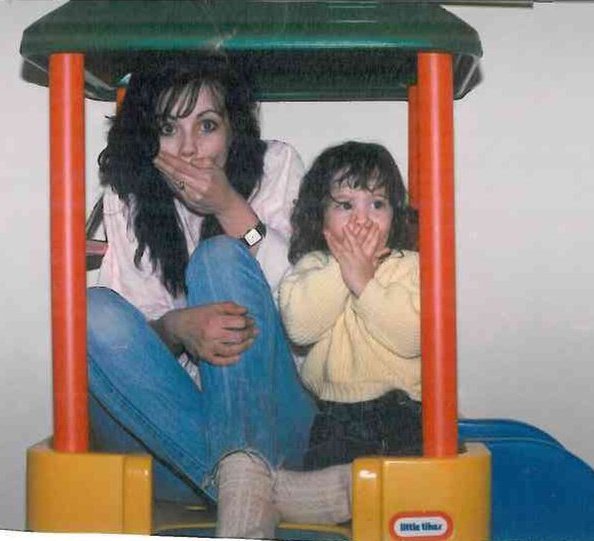
Written by: Dr. Teela Tomassetti, Registered Provisional Psychologist and Founder of the RPTC. Teela specializes in birth trauma, pregnancy loss and fertility struggles. Teela is a birth trauma survivor by way of an excessive postpartum hemorrhage. Picture -Teela and her Mom, Laura.

The “Magic Makers”: The Mental Load of the Holiday Season
I’m Amber, the admin here at RPTC. Like most Moms, I proudly wear the heavy, glittering hat of the Christmas Magic Maker in my family.
Juggling work, our home, school, activities, appointments, grocery shopping and being the primary parent is exhausting on a regular day. When you add in the relentless extras around the holidays, that exhaustion quickly mixes with the massive weight of the Magic Maker’s responsibility. Feeling pulled in a million different directions becomes my norm and I often forget about myself (more than usual). And let's be honest, most of the holiday prep we're doing on our own.
As I write this, I’m thinking I should probably be writing our family’s Christmas letter. That’s just one item on a list that seems to be never-ending: coordinating gifts, planning menus, writing cards, decorating, managing schedules, maintaining tradition, budgeting, cooking, and wrapping, just to name a few. This list goes outside of the home, spreading into daycare and school too; special outfits, treats, teacher gifts, etc. Seeing it all laid out, I know the expectations are unfair and impossible. Yet, every December, I inevitably find myself overwhelmed by my own unrealistic list. (My husband just leaned over and asked if I was writing the Christmas letter…)
This challenge is amplified when you're married to a shift-working first responder. I will never forget the Christmas I had to be Santa and the Tooth Fairy solo on the same night. My children are always asking what their Dad will and won’t be around for, and they always assume I will be there for everything. I’ve learned to plan my days assuming I’m solo parenting; if my husband is home (and awake during normal hours), that’s a bonus! I have spent enough holidays alone with the kids now to know that when friends and extended family want to plan something, I simply do not wait for his days off. While I want him to be included, I refuse to spend a holiday waiting around for him to get home while everyone else is with their loved ones. However, I am still learning to stay off social media on those days.
But over the years, as my kids have gotten older, I’ve gained a much better sense of what they truly appreciate and what I can happily take off my to-do list. There are the things I refuse to take off my list because they are actually things I enjoy even though the rest of the family might not. There’s nothing like driving around looking at Christmas lights, telling the kids to just be patient and at least be a little happy because THIS IS SOMETHING YOUR MOTHER WANTED TO DO.
I might not do all the Christmas baking from scratch this year, and that’s okay. Sometimes, it’s actually better to spend the time I would have been baking walking around a Christmas market with my kids and picking out someone else’s kitchen creations. While I am still going to carve out time to write the Christmas letter, I’ve learned to let go of the control in other areas and embrace delegation, a word that I am still uncomfy with, even after 11 years of motherhood!
My kids might want to put the window decals up and spell Christmas wrong, and that’s okay. It's actually really cute. My husband might go to the grocery store and buy a different brand of flour than I would (not as cute), but the cookies still turn out the same.
This ability to let go reminds me of an “Aha!” moment my husband and I had as new parents when our baby would never sleep. We realized there was probably someone who had devoted a lot more time and expertise into that particular area of life that we could hire to help us. It really does seem simple and silly to “forget to ask for help,” but I often forget this, especially during the holidays when I assume everyone else is too busy. So hire someone to do the cleaning, or put up the lights, that’s okay.
And Moms, surround yourself with people who support the decisions you’re making. My kids won’t be going to see Santa this year, and that’s okay. They don’t enjoy going, and I don’t particularly enjoy taking them! When you tell me you will be taking your kids to visit Santa, that is also perfectly okay and I will definitely be ‘hearting’ those photos when I’m scrolling in bed later!
I’m not sure if my hat is any less glittery this year as it was last, but I am trying my best, just like you. So this year, try to delegate tasks, subtract the things that only cause stress (like Santa visits or excessive baking), and support each other by celebrating the choices that lead to a calmer holiday!