
It’s okay to hate Christmas: Unpacking Grief and Loss During the Holidays
15 years ago today, my entire world, in the blink of an eye, completely changed. My Mom died. Just 16 days before Christmas, she had an unexpected heart attack, and she was just 49 years old. I went to bed excited for the upcoming Christmas holiday, having just gone Christmas shopping with my Mom a couple of days prior. As I got out of the car to say goodbye to her for what I wouldn’t realize would be the last time, she shouted at me from the car, “And make sure not to buy yourself anything before Christmas, I love you.” I laughed, waved and yelled back, “I love you.” And then a couple of days later, I woke up, and nothing was the same. I had lost my best friend.
My Mom was the ultimate “magic maker”, a single mother of three kids. After leaving an abusive marriage, I think she felt even more responsibility and pressure to make it perfect for us kids who were going through so much. She worked full-time to support us kids, but didn't make much and had no financial support from anyone, including our father. She did the very best she could. The tiny details that she thought of each year made it so magical. Because of her, I loved Christmas, and when I lost her, that sparkle immediately disappeared.
In the weeks to come after losing her, as we always are, I was surrounded by the “Christmas joy and cheer.” It was everywhere; I couldn’t escape it, and I constantly felt like I was drowning in it. All while navigating making funeral arrangements for your parent, picking out coffins, while others were picking out gifts to go under the tree. It felt so disconnected, because it was.
Christmas was her favourite time of year, and she died weeks before it. The anger that I felt in how unfair the universe was only began to grow, and over the next few years, I became the Grinch. And honestly, I liked it. The anger that I felt was protecting and guarding the pain, grief and loss that was too tender to share and express. And let’s be real, no one wants you to show that anyway. Much like so many other areas of our lives, we are only allowed to share the bright, sparkling parts. We tend to turn away from the dark parts, to tuck them away or ignore it. But there was no way I could. My body would remember the moment the weather shifted and the cold set in.
Society doesn’t help. We tend to engage in toxic positivity, and we demand a timeline on grieving. A year, at most. We allow those grieving to take up a bit of space those first few weeks, we offer condolences and show up to funerals or send flowers. And then people disappear when those grieving actually need them the most. We acknowledge that people will feel pain on the first anniversary, and then, subconsciously, inadvertently, and sometimes very obviously, let them know that time is up. It's time to move on and let go. But that is not how grief works. It comes in waves, in seasons, unexpectedly and like clockwork, in the “small” and “big” moments. It is what can feel like a never-ending process; there is no finish line.
The holidays are meant to bring people together, but often come with an unspoken script: be joyful, be grateful, and be festive. That script is a tall order for people navigating reproductive and perinatal trauma and the grief and loss that ensues. December has a way of amplifying what’s missing, what was hoped for, and what was taken far too soon. For those we support, they may see it transpire as: an ache for what “should have been”, increased emotional triggers, body memories and trauma reminders, with intensified loneliness and that pressure to perform and “be on.” It’s exhausting. And I wish we would rewrite the script, so that if the holiday season truly is about coming together, we accept people in their true forms, get curious about deeper connections and permit people to exist in the emotional state that their circumstances have left them in.
If you are wondering… it took me over a decade to reconnect to this holiday. It took me over a decade not to immediately break down crying when I heard a Christmas song or watched the snow fall. It took me over a decade to no longer be held hostage by the anger and resentment and embrace that I was hurting, that I missed her more than anger could express. It took over a decade for me to finally stop hating this season. How did I get there?
To the one navigating grief and loss during the holiday season… give yourself permission and don’t wait for others to provide it. Honour your grief, slow down while the rest of the world hurries on, and sit with the pain. Grieving them is truly how we honour those we have lost or the experiences we wish we had. Grief is another way to say this mattered. Surround yourself with those who get it and accept you, and if you can’t find them, look within. Self-compassion is what will get you through these times: that deep inner love for yourself and acceptance of where you are at. That is how we return to our sparkle, by holding ourselves and our experiences close, and acknowledging what it all really means to us.
How will I honour my Mom and my grief this year? I talk about her with my little girl at every opportunity. I tell her about memories connected to my Mom; we put up ornaments on the tree for her; we listen to Christmas songs my Mom loved; and we dance to them together. I show her pictures of her alone and her and me together. I let her know how much she is like her Grandma. And she sees me in my true state, in grief and love. I do not hide it from her, or minimize it, or quickly brush my tears away. I sit in it, and I invite her to witness that or sit in it with me, which she often chooses, as she longs to connect with her, too. As the years have gone on, I see so much of my Mom in me, and how I celebrate this time of year with my daughter. I have reconnected to my Mom and this season through love. Not forcing gratitude or moving on, but through love for my daughter and, most importantly, loving myself, every grinchy part that needed to exist over the years.
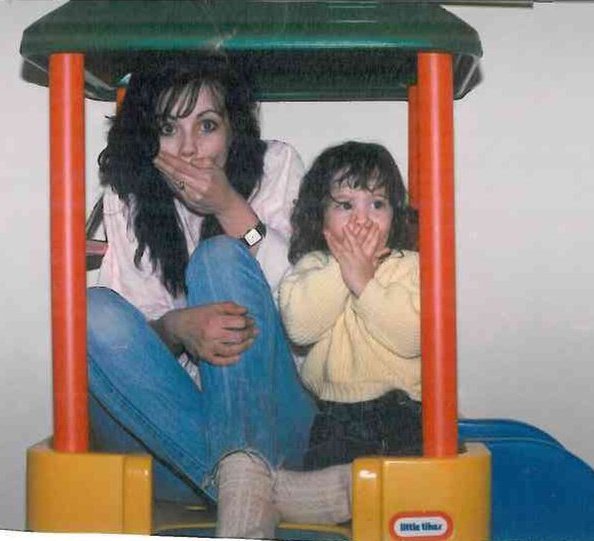
Written by: Dr. Teela Tomassetti, Registered Provisional Psychologist and Founder of the RPTC. Teela specializes in birth trauma, pregnancy loss and fertility struggles. Teela is a birth trauma survivor by way of an excessive postpartum hemorrhage. Picture -Teela and her Mom, Laura.

What Every Parent Needs to Know after Pregnancy and Infant Loss
What Every Parent Needs to Know after Pregnancy and Infant Loss
Pregnancy and infant loss is one of the most devastating experiences a parent can endure. It’s a loss that is often invisible to the outside world, yet it reshapes everything inside of you. Whether it happens early in pregnancy or after birth, the grief that follows is real, valid, and life-altering. If you’re walking through this right now, or supporting someone who is, here are some things every parent navigating this should know.
Your grief is real, and it matters.
It doesn’t matter how far along you were or how others perceive your loss. Love begins the moment you imagine your baby, and so does grief when that life is gone. Many parents minimize their pain or compare themselves to others, because they didn’t get to hold their baby or because “it wasn’t as far along.” None of that changes the depth of your loss.
There is no timeline for healing.
Some days, you may feel like you can breathe again, and on other days, it may feel like the loss just happened. Grief isn’t linear, and society often offers misconceptions about it, as well as expectations on how someone should be “over it” by a specific time. Grief doesn’t work that way, it comes in waves. Healing doesn’t mean forgetting; it means learning to carry your loss alongside life, moving forward. Give yourself permission to take the time you need, not the time others expect.
Your body may carry reminders.
Pregnancy and infant loss isn’t only emotional, it’s physical. Hormonal changes, postpartum symptoms, milk production, and medical procedures can all amplify the pain. Be gentle with yourself. Your body is not failing you, it has carried love, and now it is navigating an ending it was never supposed to endure.The traumatic aspect of the experience is also taking a toll on your body impacting areas of the brain that are really important for our functioning each day are either on high alert now due to the loss or shutting down.
You are not alone, even if it feels like it.
One in four pregnancies ends in loss, yet many parents feel silenced by stigma and isolation. Sharing your story, hen you are ready and with safe people, can connect you to others who understand. Support groups, online communities, or even one trusted friend can remind you that your grief does not have to be carried alone.
Relationships may change.
Grief affects everyone differently, and that can be really difficult to understand when we are in the thick of it. You and your partner may grieve in opposite ways, one needing to talk, the other needing silence. Friends or family may not know what to say. Some may avoid you out of discomfort. This can feel like a second loss, or what we call in psychology, secondary losses. Surround yourself with people who can hold space for your grief without judgment or pressure.
It’s okay to hold both love and pain.
The constant push and pull of opposing emotions is exhausting. You may feel joy when you see a friend’s baby and devastation in the same breath. You may smile one moment and sob the next. This duality is part of grieving a child and is complex. Love for your baby will always live alongside the ache of their absence. Both are true, and both are allowed to take up space.
Remembering your baby is healing.
Naming your baby, creating rituals, keeping mementos, writing letters, planting a tree, all of these acts of remembrance are not signs of being “stuck.” They are sacred ways of honouring your child’s existence and keeping their memory alive in your family story. Inviting others into that experience can also be helpful.
Professional support can help.
Loss at this level shakes your nervous system, your identity, and your sense of safety. Therapy, support groups, and trauma-informed care can help you navigate not only the grief but also the anxiety, guilt, or depression that may follow. Reaching for help is not a weakness; it is part of how you survive this.
It’s okay if Hope feels Fragile.
In the depths of loss, hope may feel impossible. Many around you may have the expectation of you to move on, or to express gratitude or hope. You don’t have to. You are allowed to approach hope with caution; you are allowed to feel like it is an emotion that feels far away. The more we create space to understand hope’s fragility, the more likely we are to experience it truly again.
One more thought…
Your baby mattered. Your grief matters. And you deserve support as you navigate this heartbreaking path.
If you’re reading this in the rawness of fresh loss, know this: you are not broken. You are a parent, forever connected to the baby you love. And though this journey is unbearably heavy, you do not have to walk it alone.
Written by: Dr. Teela Tomassetti (PsyD)- Registered Provisional Psychologist, Perinatal Researcher and the Founder of RPTC. Teela is passionate about supporting birth trauma survivors and loss parents, as well as those struggling with fertility. Stay tuned for groups and workshops being offered by her in these areas. You can find her @theteaonbirthtrauma.